What reply rate should you expect from outbound, and what should you count instead?
Published reply rates for cold outreach range from 1.4% to 14.6%. Most of the gap comes from what is counted. What to count instead.
We find the companies that may need what you sell, and a reason to reach out now. We write on behalf of your salesperson and hand interested buyers over for the conversation.
We usually start with a test on one segment, for example: Banks and credit unions in the US



“MSGA understands B2B sales at a level that is rare. They are precise, straightforward, and they treat your business as if it were their own. Working with them has been a pleasure from day one.”
“MSGA understands revenue the way an operator does, not a vendor. Precise, structured, and genuinely invested in the outcome. Working with them raised the bar for how we think about outbound.”
“MSGA gave our outbound a level of rigor we had not reached on our own. They approach sales as a system to be engineered, and they know the craft. A partner with real substance behind the words.”
“Working with MSGA was refreshingly straightforward. They understand B2B sales at a deep level and treat your challenges as their own. The kind of partner you actually want in your corner.”
“Working closely with the MSGA team was a great experience: thoughtful, responsive, and fully invested from day one. I would gladly work with them again and recommend them to anyone looking for a dependable partner.”
“Working with MSGA was straightforward and dependable. They bring structure and sharp thinking to how they approach growth, and they treat your goals as their own. A partner who delivers consistently and honors what they commit to.”
Figures aggregated across multiple projects. Not attributed to any single client.
Directions we've proposed to companies in recent weeks. Pick an industry to see how we get from an offer to companies, a segment and the first line of a message.
IT company with TISAX certification and projects for automotive groups
A supplier opens or expands an R&D center in Poland and hires software engineers.
Automotive suppliers with R&D centers in Poland
“I see you're growing your R&D team in Poland, and software vendors on projects like these need TISAX.”
Fintech securing banking apps, after a funding round
A bank announces a new mobile app or hires an application security specialist.
Banks and credit unions in the US
“You've announced a new mobile app for next year, which is usually when its security comes back on the table.”
IoT hardware maker with a new partner program
An integrator wins a tender for infrastructure monitoring.
Integrators and resellers in Poland and CEE
“Congratulations on the network monitoring tender. Deployments like this often need proven edge hardware.”
Software house specializing in Flutter
A large company's app has low ratings and no update in a year.
Large companies with aging native apps
“Your app's last update was a year ago, and recent reviews are mostly about login problems.”
Advisor in real estate development financing
A developer buys land or gets a building permit.
Developers with new projects
“I see you've got the permit for a new residential project. Is financing for this phase already in place?”
Software house experienced in medical apps
A startup prepares its app for certification and hires a regulatory specialist.
Healthtech teams in Germany, Austria and Switzerland
“You're hiring a regulatory specialist ahead of certifying your app, which is usually when the team also needs hands on the product itself.”
Examples without company names; the sentences are illustrations. These are the hypotheses we start from: only a test shows whether a segment buys.
Closing is where your company makes money, and prospecting pulls your best salespeople away from it. We take over finding companies and starting conversations, and hand each one over when it reaches the agreed stage, such as a meeting.
Every service starts the same way: what you sell, who else could buy it, and why now.
Choosing companies, reasons to reach out, messages and handing conversations to your salesperson, in one process. We run it, or your team does.
Explore the system →We plan and run campaigns around an agreed objective, choosing the audience, messaging and channels - email, LinkedIn, or both.
Explore outbound campaigns →We identify companies and relevant contacts, then gather and organize the information your team needs for outreach.
Explore data services →We test how selected audiences respond to your offer and use the findings to recommend what to develop, change or stop.
Explore offer testing →We revisit inactive contacts, postponed conversations and lost opportunities, using their history and current context to decide when and how to reconnect.
Explore reactivation →We put AI and automation to work on specific tasks your team handles: from gathering information and preparing messages to working with data in your CRM.
Explore AI and automation →Tell us what you're trying to achieve. We'll help identify where support could make a difference - you don't need a solution worked out before we talk.
Tell us about your situation →We get to know your situation, fill in what's missing, and agree on the scope together.
We get to know your company's situation, your goal, and the support you need.
Step 01If anything is missing after the call, we ask by email or in a short call, only about what we need.
Step 02We agree on the deliverables, responsibilities and how we'll assess the work.
Step 03We prepare a proposal priced for the agreed scope and walk you through it in a meeting.
Step 04Knowledge of your product, your market and what you have already tried, plus access to the data and tools needed within the agreed scope.
We build in your accounts, so domains, mailboxes, tools, workflows, data and documentation stay with you. We agree upfront who runs the system and what access and guidance your team will need.
Before MSGA existed, we worked directly in sales and client acquisition: building sales pipelines from scratch, running full sales cycles, opening new markets and improving CRM processes. That experience goes into every project we take on today - from a single campaign to building an entire system.

Wojciech spent years on the B2B front line before building the system MSGA runs today... He started in high-volume telesales, ran the full sales cycle for a VC-backed SaaS company selling across 13 markets, took a well-known consumer brand into B2B and wholesale, and sold complex creative and engineering services where understanding the client's needs is central to the sale. Along the way he rebuilt CRM and RevOps environments to measure real revenue instead of vanity metrics. He is responsible for diagnosis and solution architecture.
An SDR agency adds people who send messages, usually from templates. We start from your offer and your market: they decide which companies we write to and why. Messages go out on behalf of your salesperson, and we hand interested buyers over with the full conversation history. That's why it isn't a copy of someone else's campaign.
LinkedIn outreach usually starts about two weeks after we agree the scope. That time goes into choosing the companies, finding the reasons to contact them and writing the messages. Email from new domains needs four to six weeks of warm-up, so we start on LinkedIn or on your existing, warmed-up domains. We judge whether a direction works after six to eight weeks of outreach, not after the first replies.
We use Claude models for research and first drafts, and work in your tools: Apollo, lemlist and your CRM. We set everything up in your company's accounts, so the data, mailboxes and workflows stay with you.
Yes. You can work with us on a standalone campaign or a specific part of your process without commissioning a full system. We start by discussing your goals and current setup, then agree on the preparation and work required.
We can take over an agreed part of the process - building prospect lists, preparing and running campaigns, or reactivating earlier contacts, for example. We agree and write down the division of work between us and your team at the start, so it is clear who is responsible for what.
AI can help research and organize information, draft messages and categorize replies. Automation connects tools and carries out agreed steps, such as running outreach sequences or updating the CRM. Before launch, we define approval points and responsibilities for MSGA and your team.
Usually yes - we work in your environment or in ours, depending on what we agree. We check compatibility of specific tools before we start, because the scope of integration differs between systems and not every setup is possible.
The scope of work, the number of markets and segments, the state of your data, the number of channels, and which activities stay on your side. We don't publish a price list or packages: we price each proposal for the agreed scope. You get the price and schedule in a proposal we walk through with you in a meeting.
Email and LinkedIn campaigns are part of our work, but we don't stop at sending messages or delivering contact lists. We run a campaign end to end: we choose the companies and people, write messages based on the recipient's situation and your offer, handle replies and hand over interested contacts with their context, against criteria agreed at the start. We can also connect these activities into a system that runs repeatably. Negotiation and closing stay with your team.
Yes, as a standalone service or as part of a campaign. Before we start, we agree the selection criteria for companies and people, the information you need, the scope of verification and the delivery format. We build the list for a specific use, not as a generic contact database.
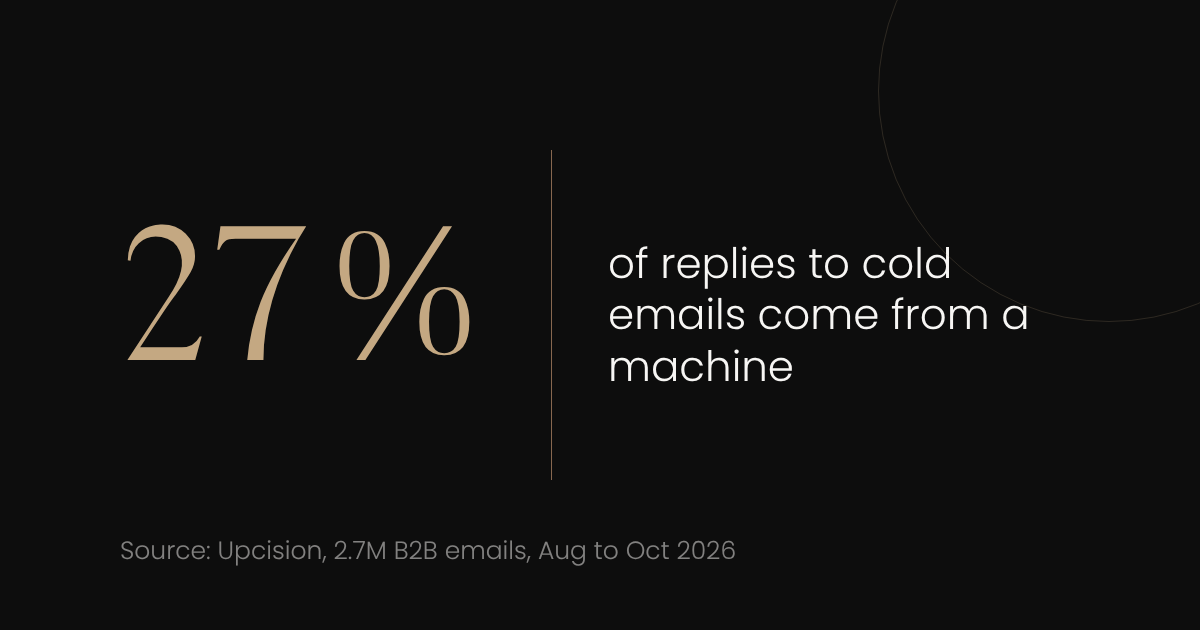
Published reply rates for cold outreach range from 1.4% to 14.6%. Most of the gap comes from what is counted. What to count instead.
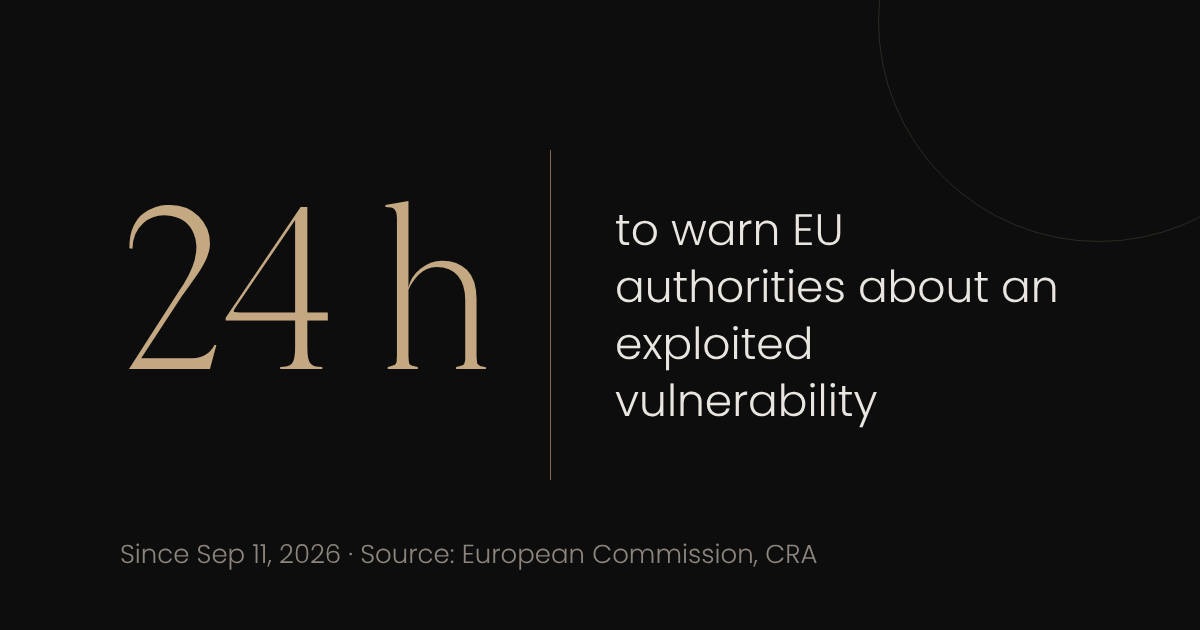
Since September 11, 2026, EU manufacturers have 24 hours to warn authorities about exploited vulnerabilities. What that means for the companies that write their software.
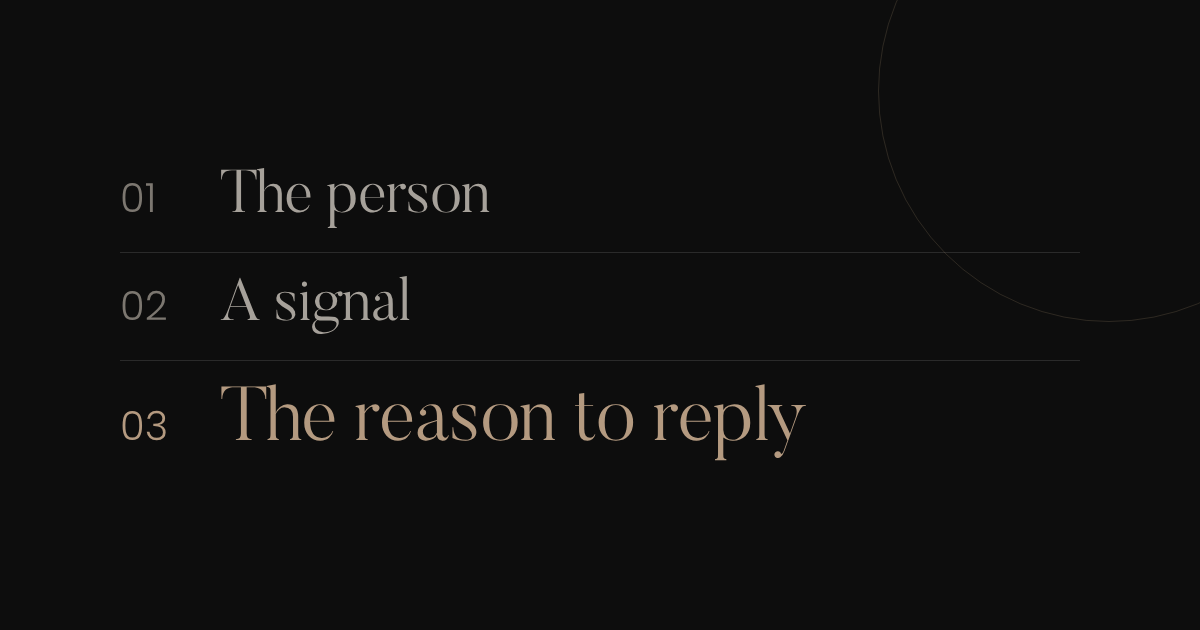
Automated personalization helps an email get read. A reply needs a reason for contact that comes from how the company sells.
Tell us what you want to achieve and where your company stands today. We'll explore how we can help. Start with a call or a message.
A 30-minute conversation about your current setup, goals and where you need support.
Book a call →Prefer to write first? A few sentences are enough. We'll reply and suggest next steps.
Send an inquiry →You don't need to fill in the form before a call, or book a call after sending a message.